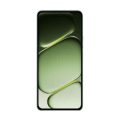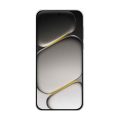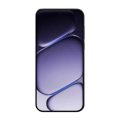
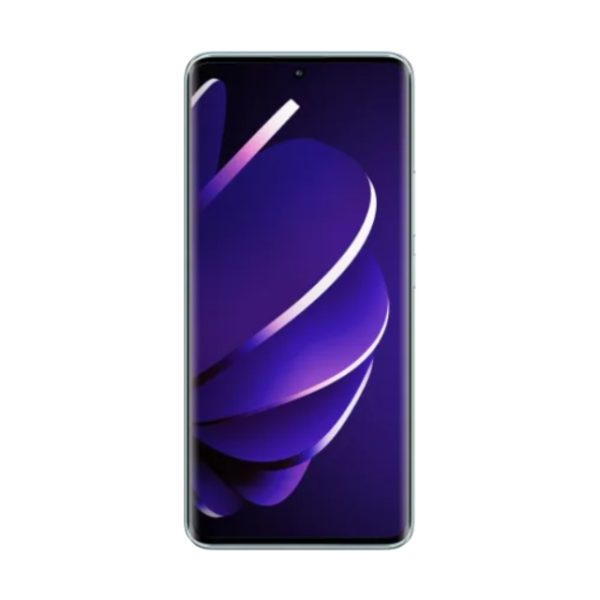
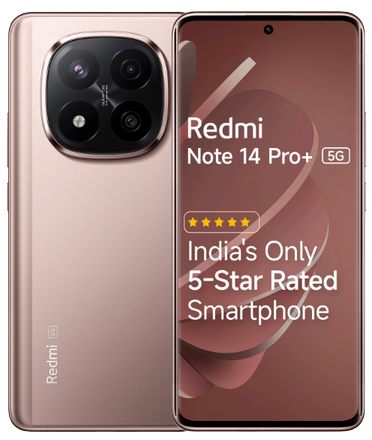
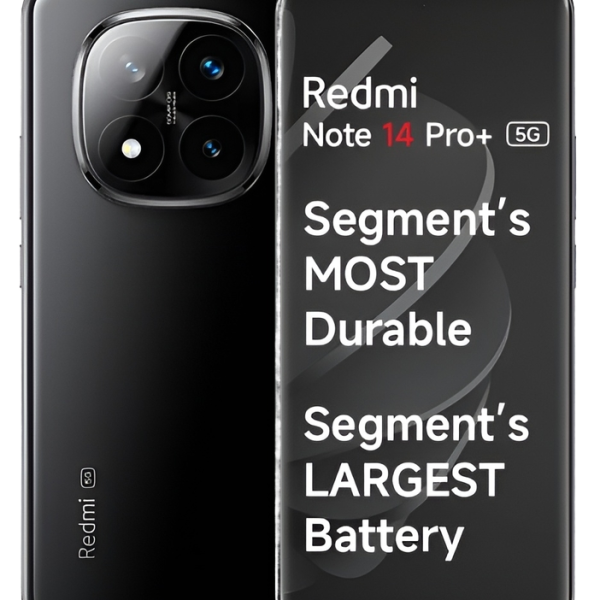
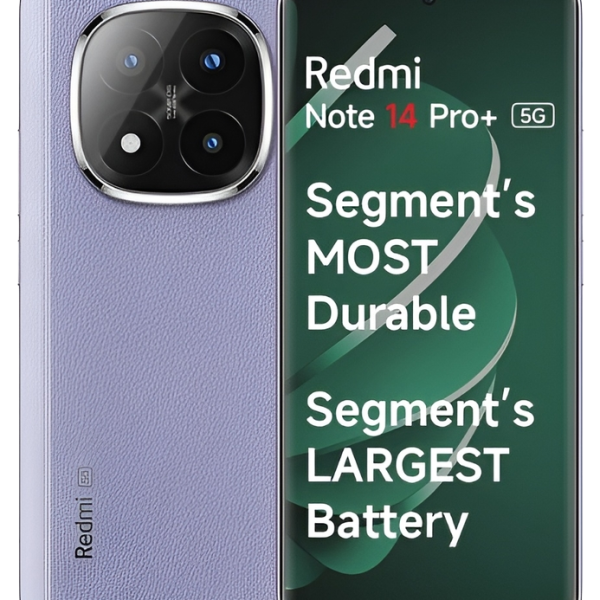
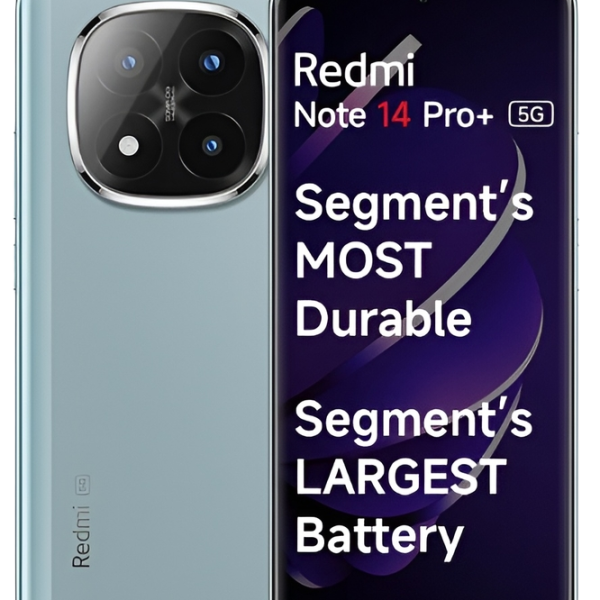
| Model Name | Redmi Note 14 Pro+ 5G |
| Brand | Xiaomi Redmi |
| Launch Date | 23/05/2026 |
| Status | Available |
| Device Type | Smartphone |
| Launch Price | Rs 27,999 |
| Model 1 | 8GB+128GB (Rs 27,999) |
| Model 2 | 8GB+256GB (Rs 29,999) |
| Model 3 | 12GB+512GB (Rs 32,999) |
| Dimensions | 162.53 x 74.67 x 8.75mm |
| Weight | 210g |
| Thickness | 8.75mm |
| Bezel Less | No |
| Color finish | Titan Black, Spectre Blue, Phantom Purple, Champagne Gold |
| Processor | Snapdragon 7s Gen 3 |
| Cores | 8 cores (Octa-core CPU) |
| Graphics (GPU) GPU (Graphics Processing Unit) is a single-chip processor designed to rapidly manipulate and alter memory to accelerate the creation of images in a frame buffer intended for output to a display, This includes things such as lighting effects, object transformations, and 3D motion. | Adreno 810 |
| Screen Size | 6.67 inches |
| Display Type Display Technology => A number of display technologies and types used in mobile phones => TFT (Thin Film Transistor), IPS (In-Place Switching), OLED (Organic Light Emitting Diode), AMOLED (Active-Matrix Organic Light-Emitting Diode), Super AMOLED (an even advanced version of AMOLED), Resistive Touchscreen (Resistive touchscreens contain two layer of conductive material with a very small gap between them which acts as a resistance), Capacitive Touchsceen (Capacitive touchscreen technology consists of a layer of glass coated with a transparent conductor) | Curved AMOLED |
| Resolution | 2712 x 1220 pixels |
| Refresh Rate |
120Hz |
| Pixel Density Pixel Density (PPI) is refers to the concentration of pixels on a particular display, measured in pixels per inch (ppi). Pixel density is calculated by dividing the diagonal pixel resolution of a display by its diagonal size, higher pixel density better display quality. | 446 ppi |
| Aspect Ratio | 20:9 |
| Screen-Body-Ratio |
93.85 % |
| Notch | Punch-hole |
| Touch Sampling Rate |
Normal 240Hz Game 480Hz |
| IP rating |
IP68 |
| Screen Protection |
Corning Gorilla Glass Victus |
| Total No. of Lenses | Triple setup camera |
| Main lens | 50MP, f/1.6, (wide) |
| Telephoto lens | 50MP, f/2.0, (telephoto) |
| Ultra-wide lens | 8MP, f/2.2, (ultra-wide) |
| Selfie camera | 20MP, f/2.2, (wide) |
| Flash Light | LED flash |
| Auto Focus | Yes |
| AI Camera | Yes |
| Rear Recording |
720p@/30fps 1080p@60/30fps 4k@30fps |
| Front Recording |
720p@/30fps 1080p@/30fps |
| 2G network | Yes |
| 3G network | Yes |
| 4G network | Yes |
| 5G network | Yes |
| EDGE | Yes |
| VoLTE | Yes |
| Hotspot | Yes |
| NFC | Yes |
| GPRS | Yes |
| GPS | Yes |
| OTG | Yes |
| Bluetooth Bluetooth is a wireless communications technology for exchanging data between mobile phones, headsets, computers and other network devices over short distances without wires, Bluetooth technology was primarily designed to support simple wireless networking of personal consumer devices. | 5.4 |
| Wi-fi Wi-Fi is a popular wireless networking technology using radio waves to provide high-speed network connections that allows devices to communicate without cords or cables, Wi-Fi is increasingly becoming the preferred mode of internet connectivity all over the world. | Wi-Fi 6 and Wi-Fi 6E |
| USB | USB Type-C 2.0 |
| Battery Capacity | 6200 mAh |
| Battery Type Battery Type => Cell phones run on various kinds of batteries depending on the manufacturer, phone size or shape and features. There are basically four types of cell phone batteries => Lithium Polymer, Lithium Ion, Nickel Metal Hydride and Nickel Cadmium. |
silicon-carbon |
| Wired Charging | 90W |
| Wireless Charging Wireless Charging (Inductive Charging) uses an electromagnetic field to transfer energy between two objects. This is usually done with a charging station. Energy is sent through an inductive coupling to an electrical device, which can then use that energy to charge batteries or run the device. | No |
| Reverse Charging |
5W |
| OS Version |
Android 15 |
| UI Version |
HyperOS 2 |
| OS Updates |
3 major Android upgrades: |
| Security patches |
4 years |
| CPU CPU (Central Processing Unit) mostly known as processors, CPU processes instructions in order to carry out certain functions that make your device operate properly. Processors are often described as the brain of computers, smartphones and tablets, Smartphones and tablets rely on processors to carry out their every task, Processors are an incredibly important factor in selecting any type of computing device, including your smartphone. | 249,112 |
| GPU | 190,271 |
| Memory | 125,771 |
| UX | 160,648 |
| Overall score | 725,802 |
| Single-core score | 1,168 |
| Multi-core score | 3,234 |
Xiaomi Redmi Note 14+ Pro: Price starts at Rs 26,999. It has 4 color options: Lavender Purple, Frost Blue, Midnight Black, and Sand Gold. This variant has 3 models: 8 GB+256 GB, 12 GB+256 GB, and 12 GB+512 GB.
The Qualcomm Snapdragon 7s Gen 3 chipset has been used in the Xiaomi Redmi Note 14 Pro+ 5G smartphone, featuring a 4nm size and a maximum clock speed of 2.5 GHz. The Adreno 810 GPU is available. LPDDR5 is given in RAM type, and UFS 2.2 version is given in storage type. To give extra speed to the phone, the option of virtual RAM up to 8 GB is also given.
The display size of the Xiaomi Redmi Note 14 Pro+ 5G is 6.67 inches. It features an AMOLED display, with a peak brightness of 3000 nits, a pixel density of 446 ppi, and a refresh rate of 120 Hz. Its resolution is 1220 x 2712 pixels. IP68 has been given to protect from water and dust. Corning Gorilla Glass Victus 2 has been used to strengthen the display of the phone.
The rear camera of Xiaomi Redmi Note 14+ Pro has a triple camera setup: the primary camera is 200MP f/1.7 (wide), the secondary camera is 8MP f/2.2 (ultrawide), and the third camera is 8MP f/2.4 (macro), and on the front, we have a 20MP f/2.2 (wide) selfie camera. And an LED flashlight.
The Xiaomi Redmi Note 14+ Pro smartphone has a big battery. It has a 5110 mAh battery. There is 120W wired charging support for charging. Bluetooth 5.4 and Wi-Fi are provided.